
How to Get West Virginia Court Records
West Virginia keeps its court records in separate lanes. Circuit, Magistrate, Family, appellate, municipal, probate, and federal material each answer to a different office. The Judiciary's Court Records Access page ties the pieces together. It links to WVPASS for public Circuit material. MCR offers Magistrate case information but no document images. For the complete Circuit or Family file, go to the filing county. The Circuit Clerk there holds it. Some courthouses allow counter or terminal inspection, and a transcript must come from the assigned reporter. There is no statewide request form. Confirm ID and timing rules with the local clerk's office. Ask about local request options before you send anything.
- For a West Virginia record, identify the court and county. Note the case number or style if known, then decide whether you need a docket entry, filed document, transcript, or authenticated copy.
- Use West Virginia’s WVPASS for public Circuit material, MCR for Magistrate case information, or appellate docket and opinion pages for an appeal.
- For a full file, older record, terminal inspection, or paper copy, find the local office in the West Virginia county directory. Confirm whether the clerk accepts in-person, phone, mail, or email requests.
- A useful written request names the court and county, case number or style, record and date, copy type, delivery contact, and fee question. This is not a required statewide form.
- Send a specific FOIA request to the custodian for an administrative record. Contact the reporter for transcripts and the separate office for probate or municipal records.
- Ask explicitly for certification, then confirm the local fee, payment, postage, authorization, and timing with the custodian.
A printout from a West Virginia portal carries no certification. When the filed paper is not online, ask the clerk's office what authenticated copy it can provide instead.
West Virginia Court Record Custodians
A statewide search and the office that keeps the official record are two different things in West Virginia. The Circuit Clerk holds both Circuit Court files and Family Court files. Each follows its own public access rules. Magistrate records sit with the Magistrate Court Clerk function. In counties with fewer than three magistrates, the judge can assign that duty to the Circuit Clerk. The local directory helps you find the right desk.
Other records have their own custodians. Probate and county-government material belongs to the County Commission Clerk or Fiduciary Supervisor. A municipal court keeps its own ordinance records. The Office of the Clerk of the Supreme Court of Appeals serves both the ICA and the SCA. Federal cases live in federal court systems. These boundaries matter most when a portal shows nothing or gives only a bare case entry.
- Circuit and Family case files: Circuit Clerk, subject to Family Court confidentiality.
- Magistrate cases: local Magistrate Court Clerk; document copies are not in MCR.
- Probate: County Commission Clerk or Fiduciary Supervisor.
- Municipal ordinance cases: the named city or municipal court.
- State appeals: the appellate Clerk; federal cases: the proper federal Clerk and PACER.
Start any West Virginia case record search with the court and county printed on a notice or order. Transfers and appeals can open separate docket numbers and separate records.
Note: Clerk functions are sometimes shared between local offices, so check the filing county's contact before mailing a copy request.
Types of Court Records
A West Virginia docket, or register, is the ordered list of filings, events, settings, and outcomes in a case. It points to papers without holding them. A filed document is the real item. That means the complaint, petition, motion, order, judgment, return, or exhibit in the case file. A certified copy is different again. The clerk authenticates it as a true copy of the official record. Knowing which one you need saves time.
A Circuit case file may combine the docket, e-filed or scanned papers, signed orders, and judgments. MCR gives Magistrate case information but no document images. Published appellate opinions are free online, and other appellate papers go through the appellate Clerk. The record type decides both its source and its access rules. Need appellate copies or access answers? The West Virginia appellate Clerk's office publishes its inspection rules and fee information.
In West Virginia, the appellate Clerk keeps ICA and SCA files, while trial dockets stay with the local courts. Opinions are free to read, but broader copies follow the Clerk's fee schedule.
West Virginia Circuit Court Record Downloads
WVPASS is West Virginia's statewide public channel for Circuit Court records. According to the Judiciary, its public materials cover all 55 counties. They go back to 1999. Searching and registering cost nothing. Public document downloads run $0.25 per page plus a small card-processing fee, though an attorney of record can pull documents in that attorney's own case for free. Sealed and juvenile filings are left out. That makes the portal strong for public Circuit records, but it is no universal file cabinet for every West Virginia court.
Read a docket line with care. A filing's title and date may only summarize a separate document. Open the paper itself when the meaning matters. Do not assume anything about search filters, result caps, or how often listings refresh.
When a page is missing, older, or blocked from download, contact the filing county's Circuit Clerk about terminal access, inspection, a paper copy, or retrieval.
What a Court Record Contains
A West Virginia court record can hold case identification, parties or charges, dated filings, events, and court actions. Not every field appears in every case. Fields vary, and protected content may be withheld from public view.
| Case number and location | Court-assigned identifier and county or court location. No public code list covers every West Virginia case-number pattern. |
|---|---|
| Case description and type | Short label and category; a Magistrate schema may show filing date, trial type, claim or amount, and agency. |
| Parties or charges | Names and roles, or an alleged criminal charge. A field may be blank or absent. |
| Docket entries and filings | Dated lines may name an event, filing, code, description, or filer, not the paper or signed order itself. |
| Orders, judgments, and events | Orders and judgments record court action. A Magistrate schedule may show date, time, place, judge, and event type. |
| Other case blocks | The blank schema includes related cases, bond, civil judgments, sentences, and worthless-check information where relevant. |
This West Virginia field list does not describe every Circuit or Family case. CourtPLUS staff views include work tabs. The public portal never shows those. When a short entry is unclear, ask the clerk's office for the underlying paper.
Note: The Magistrate schema lists possible fields, not the contents of every live case record.
West Virginia Magistrate Records Need Local Clerks
West Virginia's MCR often shows a case without the actual filing. When that happens, go to the local Magistrate Court Clerk. The Judiciary lets you search by first name, last name, or case number. A single search returns no more than 30 results. Expect a possible CAPTCHA check on the way in. Plan to confirm details with the clerk rather than the portal alone.
The West Virginia Magistrate search instructions make the same point: verify what you see with the clerk's office. Copies cost $0.25 per page under Rule 11. Ask the local office about a public terminal, how copies get delivered, certification, and how long it takes. One more wrinkle matters. A felony bindover or an appeal can open a second docket upstairs in Circuit Court. A Magistrate record may not be the whole file.
Certified Copies and Fees
A plain copy in West Virginia just reproduces the record. Certification is different, since the clerk authenticates the pages as true copies. Ask for a certified copy by name whenever an official version is required. No statewide certification surcharge, fixed turnaround, or county add-on applies across the board, so confirm the local process, payment, and postage before you mail a request.
| Record or service | Verified base amount | Access detail |
|---|---|---|
| WVPASS public Circuit download | $0.25 per page plus nominal card fee | Search and registration are free; own-case downloads are free for the attorney of record. |
| Circuit Clerk paper copy taken out of office | $1 per page | Under W. Va. Code §59-1-11(b)(2); no general statewide Circuit certification add-on was verified. |
| Magistrate Court copy | $0.25 per page | Magistrate Administrative Rule 11; request the document from the local Clerk. |
| Appellate copy | $0.25/page pending; $1/page closed case or opinion; $2/page microfilm | Published opinions are free online; other copies go to the appellate Clerk. |
| Court-reporter transcript | $2.85 original page; $1 copy page | W. Va. Code §51-7-4; order from the reporter, not the Circuit Clerk. |
| Duplicate Family Court hearing recording | Actual cost or $5, whichever is greater | W. Va. Code §51-2A-8(c); Rule 6 limits access and permits withholding a child-testimony segment. |
| FOIA reproduction | Actual reproduction cost | No staff search or retrieval charge under W. Va. Code §29B-1-3. |
Treat any West Virginia fee figure as covering only the service listed. The Circuit paper-copy rate is not a certification charge in disguise. Portal pricing, likewise, does not dictate what a local clerk charges for paper. Fee schedules vary by copy type, and local delivery or authentication costs can apply. Confirm the full total with the clerk.
Federal West Virginia Court Records Use PACER
West Virginia federal cases use separate Northern and Southern District dockets in CM/ECF and PACER, not WVPASS or MCR. As of September 24, 2026, PACER costs $0.10 per page, usually capped at $3 per document; quarterly totals of $30 or less are waived. Opinions are free. A $0.12 page rate and $40 waiver threshold are scheduled for January 1, 2027.
The federal PACER pricing page describes its current access charges.
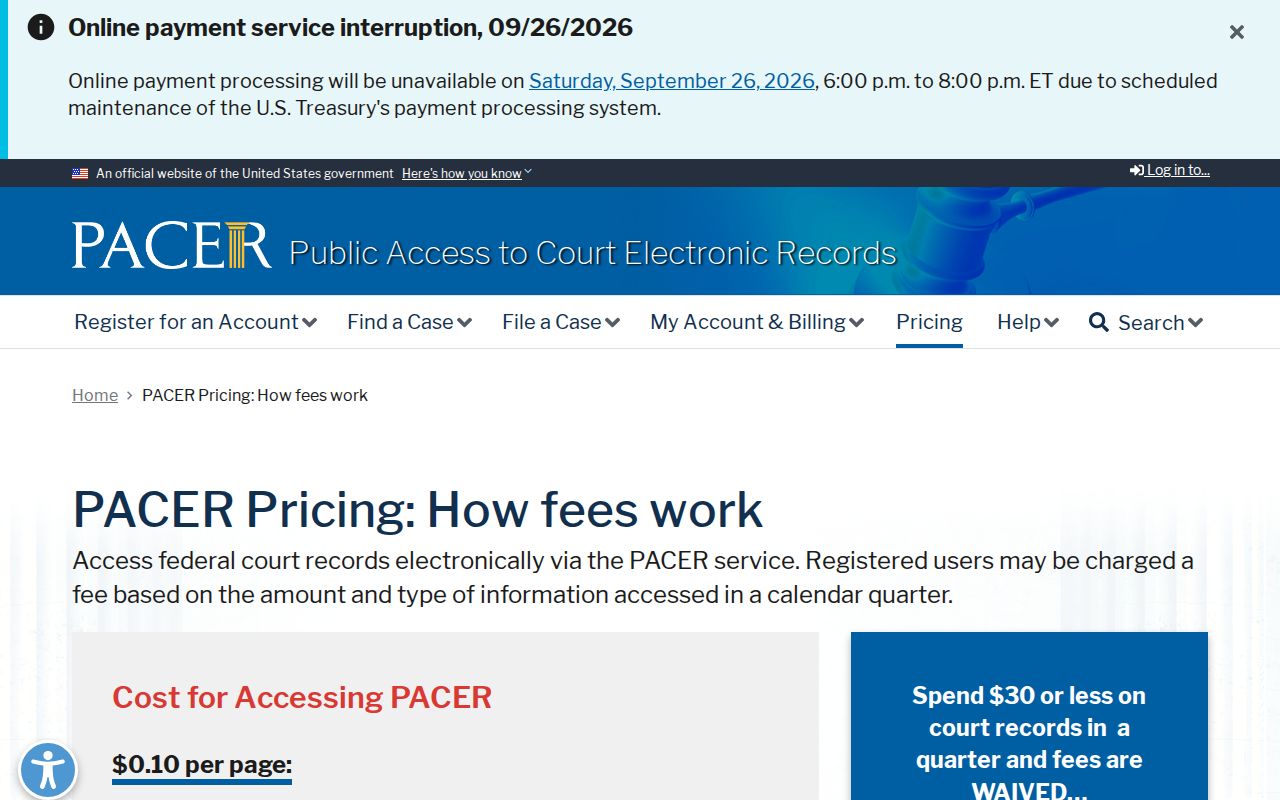
These federal PACER charges work differently from state portal fees and clerk copy fees. The Northern District court locations page identifies the divisions that make up that district.
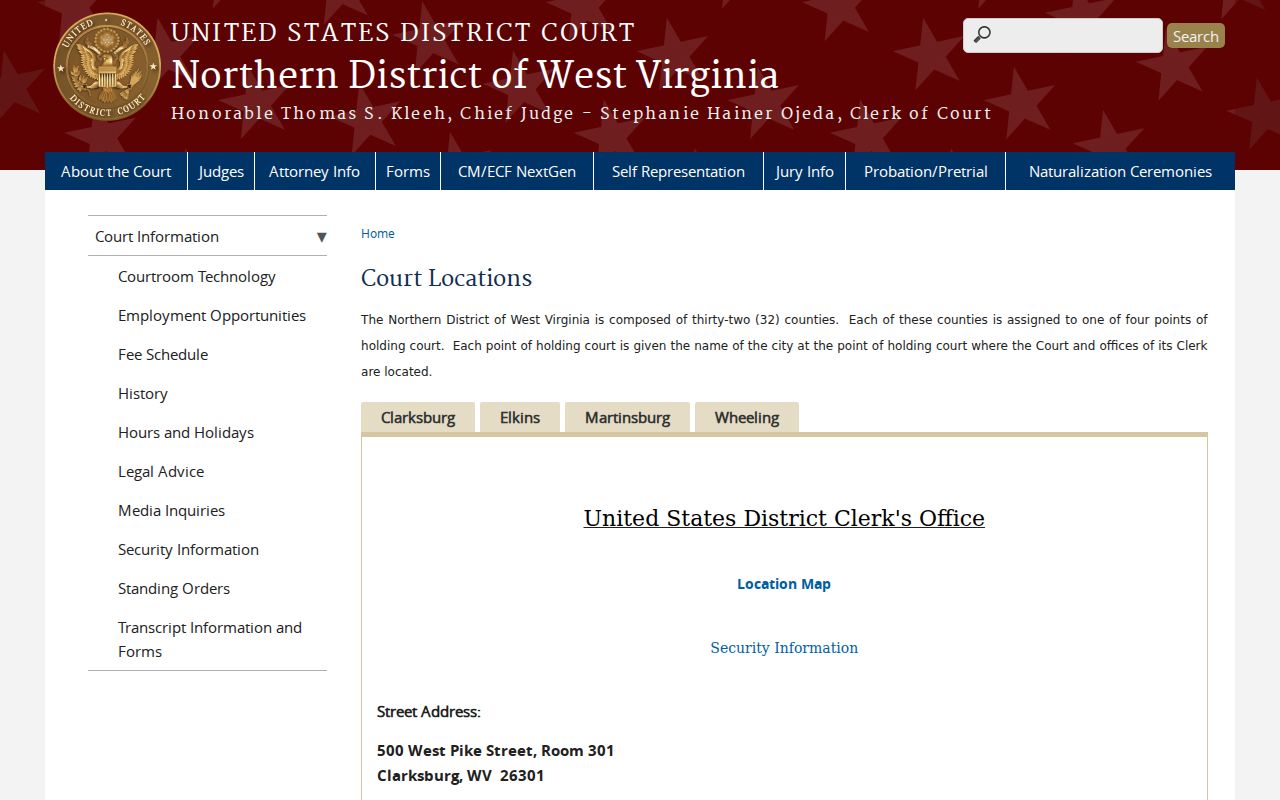
Which federal docket you search depends on the district and division where the case sits. The Southern District court locations page lists the other set of federal divisions.
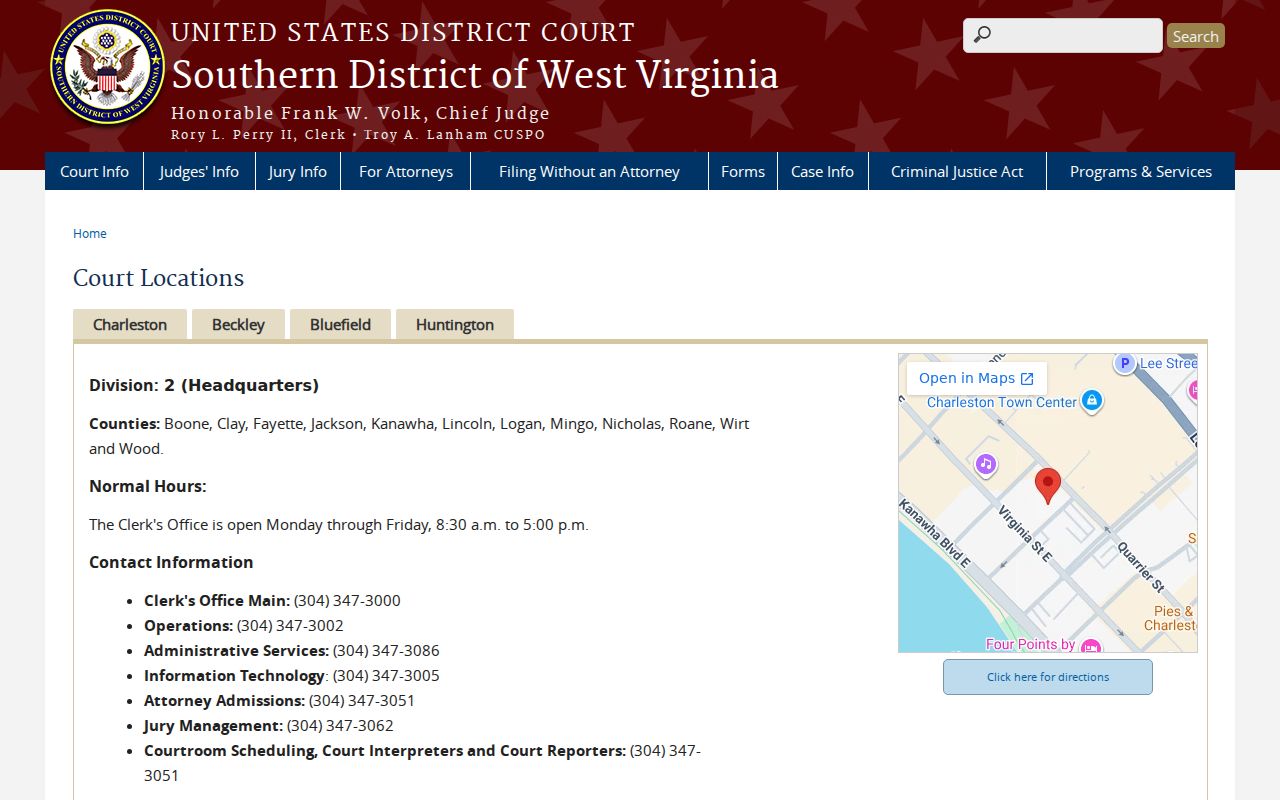
West Virginia federal district records remain outside state Circuit, Magistrate, and appellate portals.
Public Access and Sealed Records
West Virginia Code §51-4-2 opens court records to the public by default. Other statutes, rules, and orders still apply. Trial Court Rule 10.04 sends a judicial-system FOIA request to the specific custodian. The answer is due as soon as practicable. It must arrive within five days, weekends and legal holidays excluded. The custodian then produces the record, arranges inspection, or denies the request. Charges cover actual reproduction costs only, never staff search or retrieval time.
Trial Court Rules 10.03 and 15A govern restrictions, redaction, and sealing. They also cover public access to eligible electronic Circuit records. Juvenile records are generally confidential under W. Va. Code §49-5-101. Family Court Rule 6 keeps pleadings, exhibits, hearing recordings, and transcripts confidential. Orders and indexes are different. They are public and open to inspection at the Circuit Clerk counter. The rule comment notes they are not currently available electronically. Broader access requires good cause shown.
Requesting a Family Court recording? Name the case and the hearing date. Rule 6 allows ten days for delivery, and segments with child testimony may be withheld. Expunged matters may simply be absent from the file. Filers, meanwhile, must redact personal identifiers from anything they submit.
Key Rules:
W. Va. Code §51-4-2 sets the general right to inspect court records, subject to legal restrictions.
West Virginia FOIA, §29B-1-3 governs the response period, denial, and actual reproduction costs for a specific request.
Trial Court Rules 10.03 and 15A address access restrictions, redaction, sealing, and public electronic access.
W. Va. Code §49-5-101 protects juvenile records, subject to statutory exceptions.
Historic West Virginia Court Records
WVPASS lists public Circuit materials reaching back to 1999. That date is a starting point, not a promise. Every old file and every page was not necessarily scanned. Circuit Clerks may keep earlier records in paper, microfilm, or another approved storage format. Older Magistrate files also stay with their local office. West Virginia law lets courts preserve records through whichever approved methods they choose.
Hunting an older record takes a phone call. Ask the Circuit Clerk or Magistrate Court Clerk which office holds the original. Ask whether a terminal search exists. Ask, too, whether retrieval or copying needs advance notice. Pin down the case date and the document as best you can. The Administrative Office of the Courts supports statewide operations and statistics. But it does not hold each local court file. One caution is worth remembering: a portal's published range describes its stated coverage only, and it says nothing about the digitization of each historic volume.