
Traffic Court Records in West Virginia
Nearly every motor-vehicle citation in West Virginia starts in Magistrate Court. The ticket names the county court. It also gives a response or appearance date under Rule 7 of the Magistrate Court Rules of Criminal Procedure. An ordinance ticket can travel a separate route. It may run through the issuing municipality's court or traffic bureau, so the venue printed on the ticket is always the first thing to read.
Charges can climb beyond a simple ticket. More serious motor-vehicle offenses proceed as misdemeanors or felonies. The court level depends on the charge and the case stage. A Magistrate judgment can be appealed to Circuit Court. The appeal gets its own docket there. That means a traffic citation, a city ticket account, a Magistrate case entry, a payment result, a Circuit appeal, and a driving record are separate records, not one file. The clerk of the court where the matter is pending holds the actual case record.
Search a West Virginia Traffic Citation in MCR
The public online route for Magistrate case information is the statewide Magistrate Case Record Search, called MCR. The West Virginia Judiciary's guide explains searches by first name, last name, or case number. Results can include case metadata, appearance details, and docket-entry information when available. The search is free. It needs no registration.
Know its limits. MCR is an index, not a document store. It returns up to 30 results. It gives no copies of the citation or full case papers. It cannot search statewide by license plate. It will not report whether a license hold exists. A citation can also hide. That can happen if the name or case number was entered differently, the ticket is municipal, or the matter sits outside the online result set. When an entry is missing or a date needs confirmation, contact the local Magistrate Court Clerk in the filing county.
Statewide Citation and License-Hold Systems
Several state-level tools touch West Virginia traffic matters, but each answers a different question. MCR searches Magistrate case information. The Magistrate Court Payment System locates a payment item from an identifier. The DMV holds the individual driving record and status. No public, court-run statewide website tells you whether a traffic-related license hold is active. Confirm that with the court or the DMV directly.
| System | What It Holds or Shows | Run By / Access |
|---|---|---|
| Magistrate Case Record Search (MCR) | Magistrate case metadata, events, and docket entries when available | West Virginia Judiciary; free search; no online documents |
| Magistrate Court Payment System | Payment item located by citation, case, or payment-plan ID | WV.gov payment portal; $2 fee for a portal payment |
| License-hold status | No public statewide court hold lookup was identified | Ask the filing court about its notice; DMV keeps personal license status |
| DMV driving record | License status and driving record information | West Virginia DMV; driver-specific access and record requests |
West Virginia MFP Payment Search
The West Virginia Magistrate Court Payment System search finds payment information only, not a docket by name or license plate. Enter one identifier at a time: a Citation ID, Case ID, or Payment Plan ID. For a Citation ID search, the county selector is optional. Missing the ID you need? West Virginia's system help page sends you to the Magistrate Court Clerk in the county where the case was filed.
Copy the identifier exactly as it appears on the court paper, characters and punctuation included. Citation IDs run 1 to 30 characters. Case IDs run 10 to 15. Payment Plan IDs run 6 to 13. The form uppercases text automatically, and dashes in a case number matter. Counties appear as two-digit codes from 01 to 55. Remember what the result is: a payment locator. It is not proof that the court docket is complete or that the DMV has updated a license record. The portal also adds a $2 fee to any payment, on top of the amount due.
The official West Virginia payment search displays the citation, case, and plan ID fields. Its county list narrows a citation-ID search when needed.
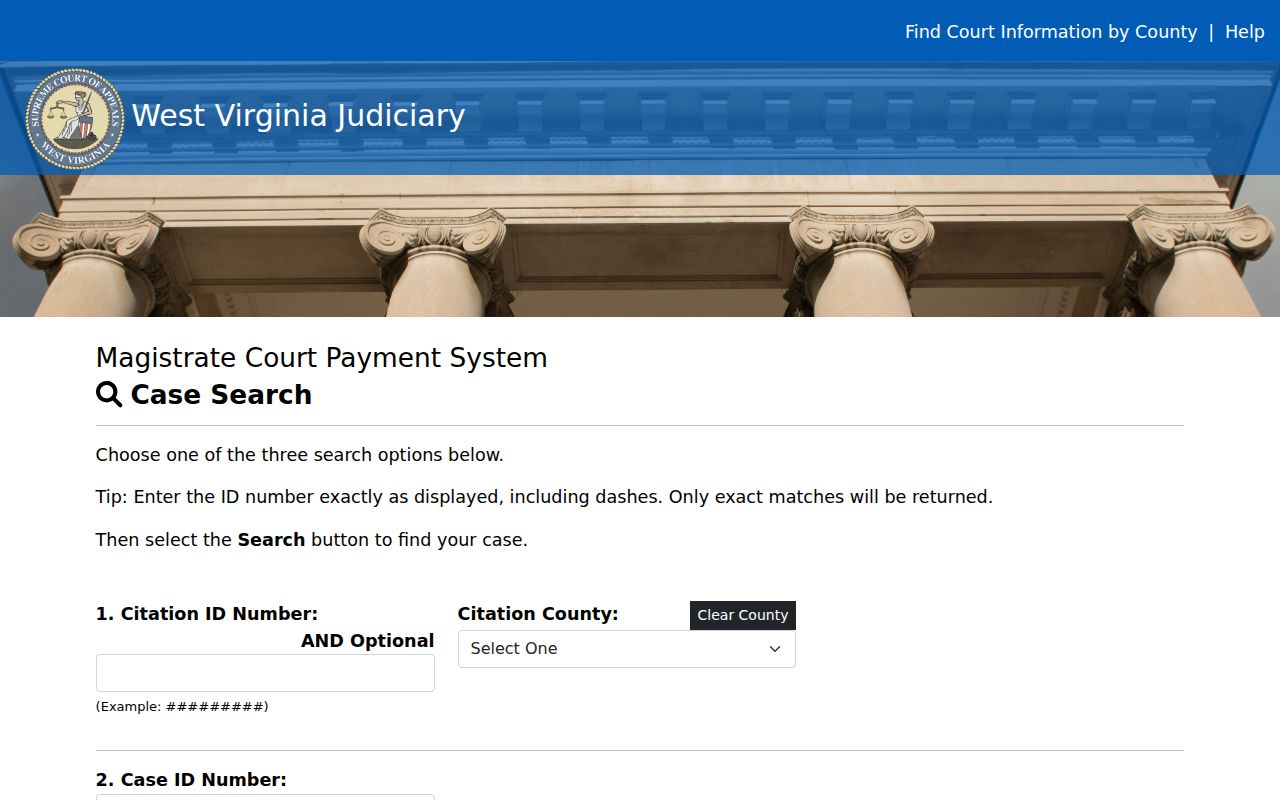
That identifier requirement explains why this tool cannot replace MCR or a clerk's docket search. Save your payment confirmation. Then ask the court clerk whether the case record reflects the payment or satisfaction.
How to Look Up a West Virginia Traffic Ticket
Start with the citation itself. It names the court, the county or municipality, the response deadline, and usually an identifier that helps locate a case or payment. Use those details to choose the right channel, and don't treat every online result as a full court file.
- Read the venue and instructions on the ticket. A state-law citation normally points to the county Magistrate Court; a city ordinance ticket may name a municipal court or bureau.
- For a Magistrate case, try MCR using the first and last name or the case number. Review the result details and the displayed event information.
- If the case is absent, the date is unclear, or the ticket is municipal, contact the issuing court or the clerk. The West Virginia county directory routes to local court resources.
- Use the payment locator only when you have a citation, case, or payment-plan ID. Check the ticket and court instructions for the response deadline and accepted payment or plea method.
A search result can point you to the right court. It cannot change the printed deadline or confirm a later setting. Keep copies of the citation plus any receipt or court notice. The case may move to Circuit Court on appeal. If so, search that docket separately from the original Magistrate matter.
Municipal Traffic Tickets in West Virginia
A ticket written under a city ordinance in West Virginia may land with the municipality itself. It may not go to the county Magistrate Court. That matters for a docket search. The statewide Magistrate case lookup and payment locator do not claim to cover every local ticket. Read the printed venue and ordinance reference. Together they tell you which office to call about a court date, a plea, payment, or a copy of the filing.
One caution first. A citation handed out inside city limits is not always a municipal case. West Virginia state traffic law can still send it to Magistrate Court. Trust the court named on the form. Do not trust the address where the stop happened. City ticket? Ask that municipality which office holds the case. Ask whether it runs its own case lookup or payment channel. If the citation names a county Magistrate Court, use MCR or call that court's clerk. A county-level listing helps route a state-court question. City procedures, though, must be confirmed with the city on the ticket itself.
Paying or Contesting a Ticket in West Virginia
Paying and fighting a West Virginia ticket follow different paths. Rule 7 lays out the plea options and the steps for responding. A payment portal alone will not spell out every legal effect of paying. And paying generally counts as a guilty plea. So read the citation and the court rule before you send money if you plan to contest. The local court keeps the case record and sets any trial date.
| Paying | Contesting |
|---|---|
| Use the payment method authorized by the court, with the citation, case, or plan ID if required. The court records the disposition and payment status. | Enter a not-guilty plea or notice of intent to contest in the manner allowed by Rule 7 and the citation. The court schedules the matter for a hearing or trial. |
| Follow the response date and instructions on the ticket. Do not assume a portal payment instantly clears a DMV status record. | For a noncustody party, Rule 11 requires first-class-mail notice of a contested trial at least six weeks before trial. |
| Confirm with the clerk if payment does not appear or the record still shows an open balance. | A written continuance motion under Rule 12 generally must be filed and served at least 10 days before the first trial date, subject to a good-cause exception. |
Missed response or court date: For covered motor-vehicle matters, West Virginia law allows license suspension after the court reports a failure to respond or appear. Parking and unattended-vehicle citations are excluded from the covered definition in the statute. Contact the filing court to learn what it recorded and whether a response or notice was sent; check license status with the West Virginia DMV.
West Virginia Traffic Failure-to-Appear Reports
Missing a court date carries a specific cost in West Virginia. The DMV suspends a resident's license, or a nonresident's driving privilege, once a court sends notice of a covered motor-vehicle violation. That authority comes from West Virginia Code §17B-3-3a. The timing comes from Magistrate Rules 7(e) and 5.3. Those rules direct the clerk to notify DMV within 15 days after the scheduled response date when the required appearance or response never happened, subject to the rule's exceptions. Section 50-3-2a(j)(1) adds a separate duty. Notice is due within 90 days for a failure to respond or appear in a criminal case. None of these deadlines promise when DMV's own system will display the change.
Already paid the ticket? Ask the filing clerk whether the disposition was entered. Ask too whether a notice of satisfaction went out. The Magistrate payment locator is not documented as a hold-status tool. So treat license questions as DMV territory. A docket entry and a DMV status result come from different offices and may not update together.
The DMV driving-record instructions lay out the official request routes a driver can use. Requesting your own driving record is separate from searching a traffic case in the court docket.
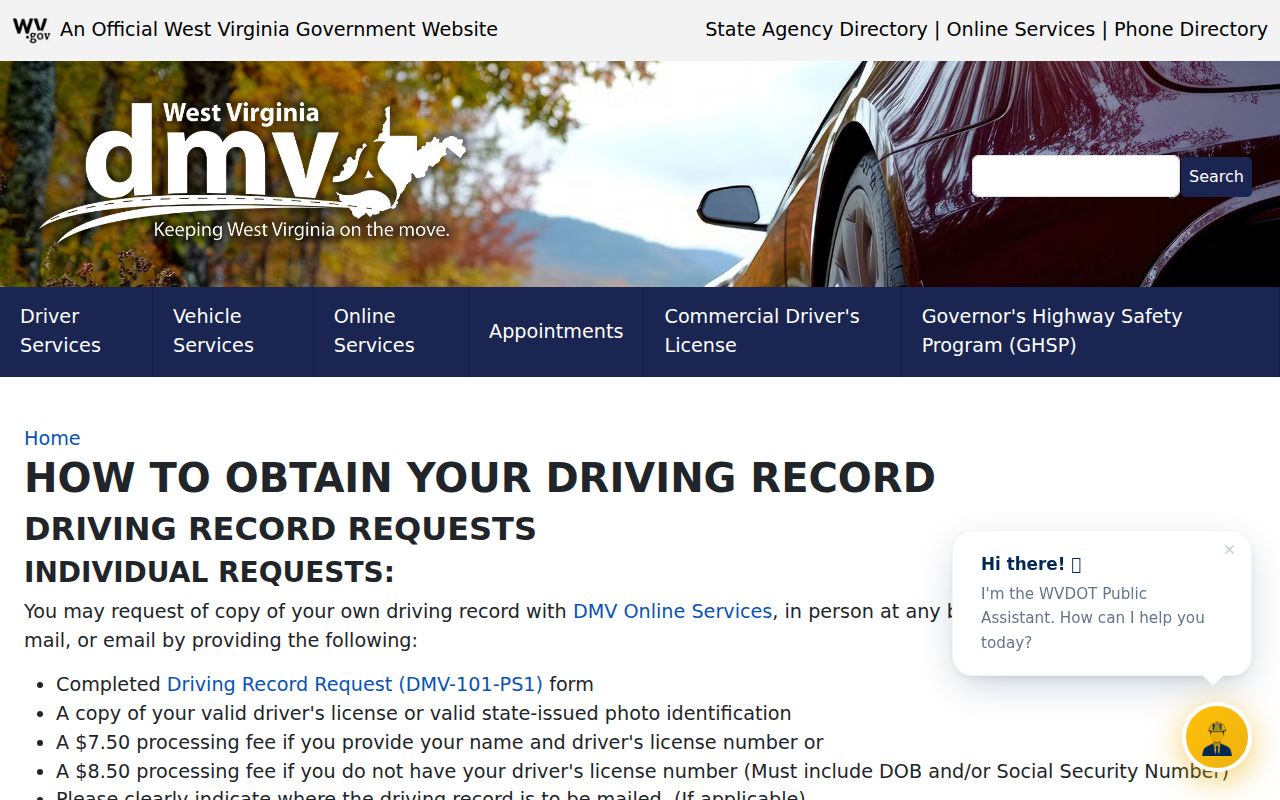
Say the court confirms its record is correct, but a West Virginia license status still looks unresolved. Ask the clerk how the notice was transmitted. Then ask DMV how to verify the individual record. Screens can mislead in both directions. A status display alone does not prove a ticket went unpaid. And a changed DMV result does not mean the court erased its entry.
Court Traffic Record vs Driver Record
Two records, two answers. The West Virginia court record covers the case itself: the citation, filings, plea, hearings, judgment, and fine. The Magistrate or municipal court holds all of it. The DMV keeps a person's driving record and license status. It is fed in part by what courts report. So a court docket search will not produce a full license history. And a DMV status tool is no way to look up someone else's court case.
| Court Traffic Record | Driver Record | |
|---|---|---|
| Kept By | The court where the citation or appeal is filed, through its clerk | West Virginia Division of Motor Vehicles |
| Shows | Citation, plea, case events, disposition, and court payment status | Driver-specific license status and record information |
| How to Get It | MCR for available Magistrate case data; request papers from the local court or clerk | DMV’s authorized status or driving-record request channel |
The DMV's individual status lookup works only after driver-specific authentication. It is not a public citation search.
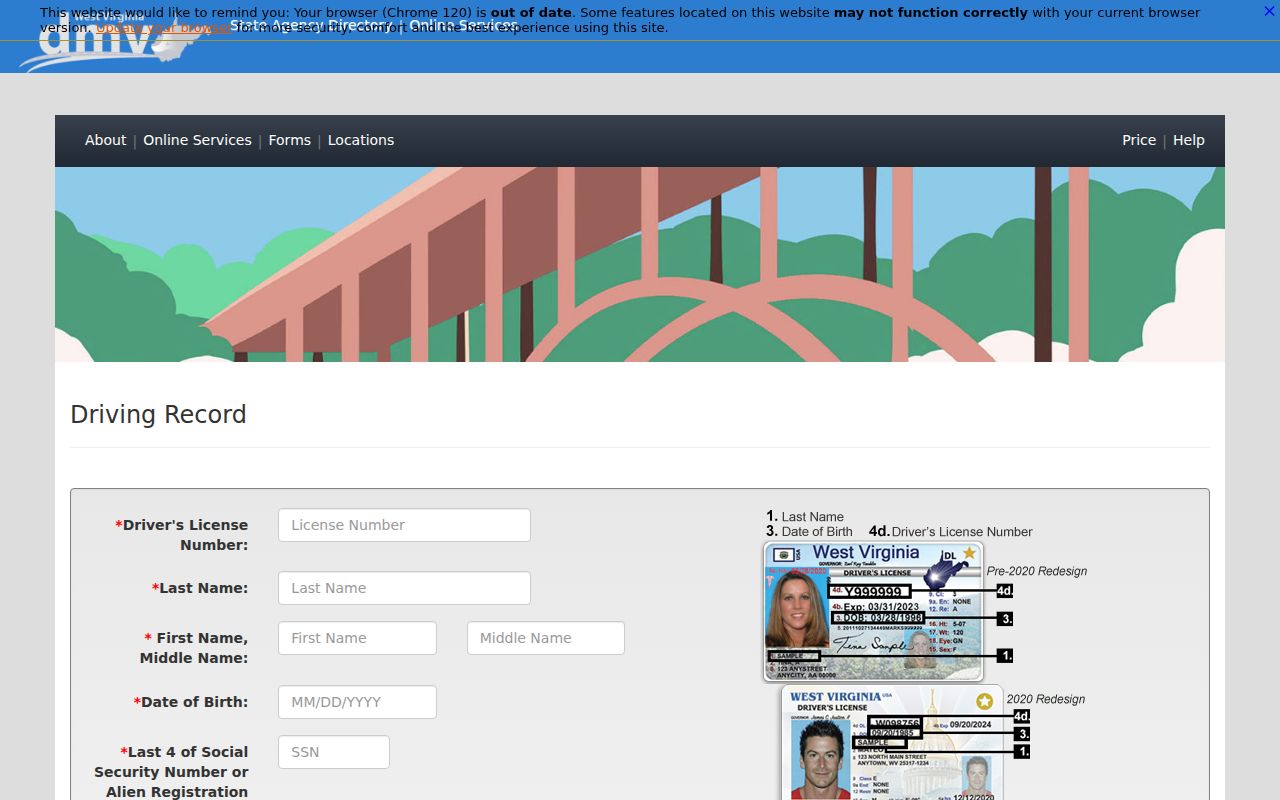
Need a copy of a court document? Ask the court that holds the case. License status and driving records go through DMV, under its identity and authorization rules. And if a Magistrate judgment was appealed, remember that the original case and the Circuit appeal carry distinct docket entries.
West Virginia Traffic Deferrals and Photo Enforcement
West Virginia has no general deferral for a speeding ticket. The DUI deferred-disposition law is a narrow statutory program. Under §17C-5-2b, a qualifying first-offense DUI case must meet specific conditions on eligibility, notice, probation, alcohol testing, and program completion. Finish everything and you may have grounds for a motion to dismiss. Miss the terms, and the deferral ends. The Judiciary's DUI deferred-disposition form belongs to that process alone, so do not treat it as a routine citation form.
A defensive-driving course can affect points on a DMV record under the DMV point system. That is not the same as wiping out the court case. The docket still turns on the court's ruling and the applicable law. Check with the court before counting on a course to change a plea, a disposition, or a payment deadline.
Photo enforcement is a different story. West Virginia Code §17C-6-7a bars police from using photo-monitoring devices to detect or prove municipal, county, or state motor-vehicle violations. A companion statute, §17C-6-7, covers radar and other speed-measurement devices instead. One bans a photo method outright. The other governs enforcement evidence the law allows.